Many images and concepts about Zen are in the public eye nowadays — it’s not something unknown anymore. We see Zen in connection to aesthetics and design; a perfume has come out with the name Zen; wellness products are sold with a picture of a Zen monk with a shaved head and rakusu... So what is Zen about?
The title of this lecture asks the question, “Why practice in everyday life?” I think in fact it’s the other way around. For most of us, that’s how we started: our daily lives confront us with questions that aren’t so easy to answer.
However, human beings are inventive: there’s a question or problem, we look for a solution, most of the time the solution raises other questions, and so on. Science develops in this way.
But this way of doing things is ineffectual when we’re faced with certain conflicts (someone once said that the sign of a true conflict is that there is no way out), or with the basic questions of our existence, such as that of suffering. In fact, as tradition tells us, the starting point of Buddha’s teaching is the question of suffering.
After the death of Shakyamuni a council of the longest standing disciples was held during which the content of the teaching (Dharma) and the rules of conduct for the monks (Sila) were formally established. The States and the regents back the Buddhist community and build monasteries generously provided for by donations of all sorts from the authorities and the population.
More and more often monks tend to reside in the monasteries and progressively abandon the nomadic life advocated by Buddha. A century and a half after the death of its founder, the community splits into two movements, each, in the aftermath, giving birth to several schools of interpretation.
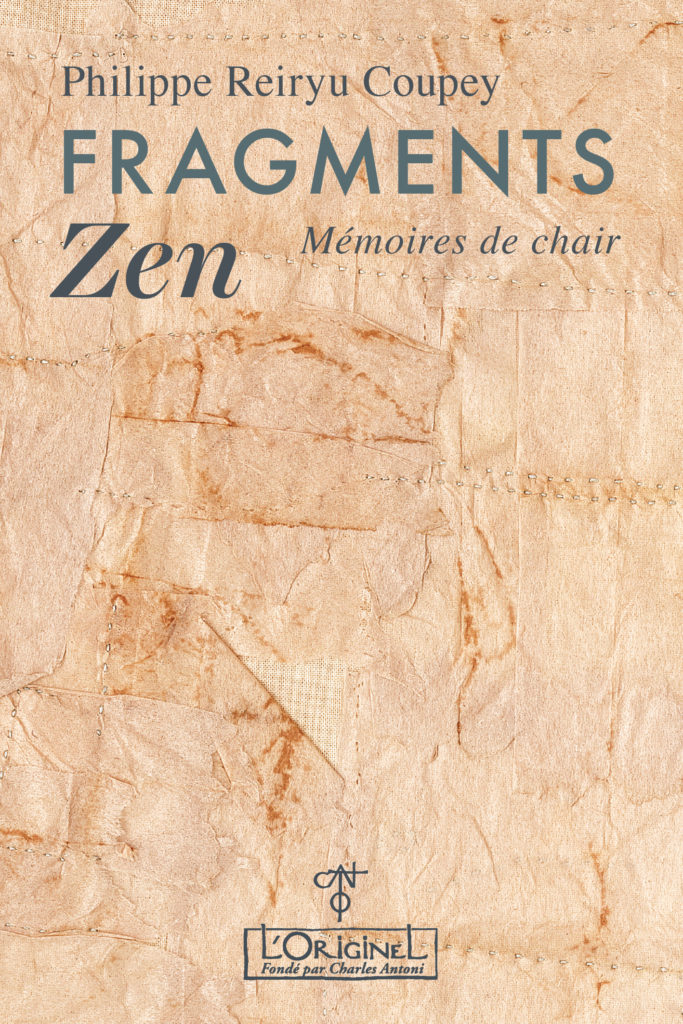
The following texts trace an exchange between Philippe Coupey and some of his disciples, which began with a kusen delivered in spring 2005. While the subject is ostensibly Zen and the unconscious, the teaching, the responses it provoked, and the consequent reactions of the master go far beyond the original theme.
One day during a sesshin, Philippe Coupey glanced at me during the meal and said, “You don’t look very normal…” He was comparing me with Eric, a schizophrenic practitioner who was eating at the next table.
What’s normal?!… And that’s how I started thinking of them: “The Dino,” Charly and the others…
For instance, do you know who “The Dino” is? read more
When we look at our difficulties, whatever they may be, they are fundamentally bound to this suffering of non-realization of the self. Not realizing one’s self means not being fully here, not being fully intimate with what we are living. Living here where we are does not necessarily mean being accepted by society; it means having the feeling that our existence is truly connected to the world.
The mistake of separating subject from object, the futility of looking for a pure intellectual understanding of the world, is always at the centre of Buddhist teachings. Today, modern science links up with Buddha’s intuitions in a surprising and spectacular way. read more...
From the flower turned in the Buddha’s fingers to the flower springing up from a rock, All I have to do is follow this path to encounter the practice of the art of Japanese flower arranging: Ikebana. read more...
The practitioner who commits to the Way has every likelihood of meeting many obstacles on his or her path and falling into traps of which he or she is not aware. Being ordained monk, nun or Bodhisattva does not necessarily save you from these pitfalls. read more...
Who has not watched or listened to a television or radio program, or read a news or magazine article about the recent scientific research into aging and death?
Personally the first time for me was while watching the National Geographic channel . . . . Bewilderment . . . .
Yes, how bewildered I was facing the perspective of a genetically modified human being capable of defying death with a body full of nano-robots which would remain in perfect health over centuries. Restore our veins, destroy cancerous cells, eliminate fat, patch up organs. Live and go on living for hundreds of years, no more diseases, a perfect body. I love life, so why haven’t I shed a few tears of joy before these promises of such a bright future? Or even divine? read more
Clairelise: I’m counting on the audience to ask questions... But to start things off, can someone say a few words about the master-disciple relationship, which is a bit foreign to our way of seeing things when we don’t practice Zen?
Christian: This is a relationship that is not really understood in the West because we always imagine a superior/inferior relationship: the one who knows vs. the one who doesn’t. But there’s nothing of that in a true master-disciple relationship. It’s an encounter between two people who are each on the path of their life and practice. And suddenly, there’s a confrontation, an exchange about the essential thing that makes us alive. There is mutual respect in this confrontation, the recognition that they share something essential, and that they can help each other. When you practice facing the wall, you’re alone with yourself, and many people conclude that they can do that at home. I say no, you can’t do it all alone, because if you do, you close yourself up in a shell. And the master is there to help you out of that shell. The master was a disciple himself once, and always remains a disciple. read more...
an interview with Daniel Guétault, one of the first disciples of Master Deshimaru
In the mid-1960s, Daniel Guétault was a follower of George Ohsawa, the founder of macrobiotics. On a trip to Japan to attend a conference, he met a Japanese Zen monk who would later be invited back to France and change — or rather begin — the history of Zen in Europe. It was forty years ago this July [2007].
Mr. Guétault represents a number of “firsts”: he became Master Taisen Deshimaru’s first disciple; received the first rakusu, Zen “certificate” and kyosaku; made the first genmai ever on the Continent; and opened the first dojo in 1967, in Tours, where he still resides today.read more
A new chronicle that follows the river of sesshin, zazen days and introductions to the practice. Along this wide river, turbulent or calm, we sometimes meet up with remarkable karmas. Such was the case last November, in a village an hour outside of Paris…
During my visits to the monasteries the subject of food was often discussed and many times I was asked about the alimentation in our temple. So the next year as I was returning to Myanmar I got the idea of putting together a traveling cooking show on the subject of genmai, a centuries-old Zen Buddhist breakfast served after the morning ceremony following zazen.
Myanmar is a welcoming country, but they do have a tendency to be wary and somewhat skeptical of foreigners’ intentions – especially if these visitors are addressing groups or congregations of locals. But then, what could be more innocuous than some guy talking about vegetable soup? read more...
The field of happiness in all lands, And in that field no land in sight.
The true home is far-reaching, And therein rests the middle of the world.
Sebastian Nicolle wrote this poem after the summercamp 2009 in Neu Schönau, northern Germany.
Uli Dietze
Laura, my bicycle+me
when the wind blows over your young head and over my old one on my bicycle
everything will become one the wind and you and me
Uli Dietze, 44, is a Zen monk living in Tübingen, Germany. He works as a locksmith, is married and has a 14-year-old daughter.
Peter Campbell
Sesshin
6.10 am Still dark Some idiot’s been snoring all night Up 4 times —
The rolls of his snores Crashing and breaking Against the rocks Of small mind
A rush of energy And some birds, Unknown birds, Sing their things...
And he won’t be an idiot much longer
Smell of shit and toothpaste And the gamey male body And vegetation, fresh after rain And the night and hot showers —
And the sounds of bracing, sighing Reluctant bodies — And the genmai is watery
Damn.
Peter Campbell is currently serving out the results of past karmic ineptitude in Paris’ up-and-coming 20th arrondissement where he is to be seen lying, boasting and living beyond his means in a variety of clip-joints and bars à vin.
Guy Faure
The Shadow of Emptiness
The shadow of emptiness seeks its path Groping along the city. Slipping. Slowly. Amidst the sparkling. All around. Endlessly. To the sound of the heart. To the sounds of the night of the soul...
Jazzy jazz, viva la paz, peace within you, buddha, looking you straight in the eye, absent but in front of you, just passing shadows, wind on the windows, full of lone emptiness, stars inside...
Buddha of the red halos, white buddha of quivering neon in the damp dark of autumn nights, yellow buddha of moving glimmers in the streets of shining puddles...
Guy Faure, 34, is a monk living and practicing in Nantes, where he paints, draws, writes and sometimes looks for work. He has several collections of poems in print (in French): Barefoot in the Snow, Wild Grass and Armed Concrete, and, hot off the press, Children Must Save Themselves...